Best heater 2026: how to choose without regret
A straight-to-the-point guide to picking a heater based on where you'll use it, how much space you need to warm and how much noise and running cost matter to you.
1. First decide where you'll use it
There is no single "best heater": there is a best heater for your situation. A ceramic tower model that's perfect for the living room is a poor buy for a workshop, and an industrial fan heater in a bedroom is unbearable for noise and running cost.
2. Work out the power per square metre
The usual rule of thumb is 60 to 100 W per m² in a home with normal insulation. If the room has large windows, high ceilings or faces outside, aim for the top end. For uninsulated units and garages the figure climbs and an industrial model is the way to go.
3. Pick the type by what matters to you
- Ceramic / tower: heat up fast and take little space. A solid all-rounder for the home.
- Oil-filled radiator: quiet and with thermal inertia; slow to heat but holds the temperature. The best choice for sleeping.
- Convector / panel: gentle, even heat, wall-mountable, good control.
- Infrared / halogen: instant directed heat onto people or objects; not much use for warming the air of a whole room.
- Industrial forced-air: lots of power and airflow, metal housing; for workshops and large spaces.
Convection and radiation: the two kinds of heat (made simple)
Almost every heater warms in one of these two ways, and knowing which suits you helps you get it right:
Convection heat. The device warms the air. Warm air is lighter and rises, cold air drops to take its place, and a current forms that gradually warms the whole room. It takes a little longer to feel, but it spreads the heat evenly and keeps it. This is what convectors, fan heaters and forced-air units do. Ideal when you'll spend a while in a room: living room, bedroom, office.
Radiant heat. The device sends heat out in a straight line, like sunlight or the warmth you feel in front of a fireplace. It instantly warms the people and objects in front of it, but barely warms the surrounding air: step aside and you stop feeling it. This is what halogen or infrared heaters and radiant panels do. Ideal for a quick, targeted burst of heat: a bathroom, a work corner, a covered terrace.
And the ones that do both. The oil-filled radiator is the best example: its fins radiate heat and, at the same time, create a gentle fan-free convection. That's why it heats slowly but very pleasantly and quietly, and keeps giving off heat for a while after you switch it off.
4. Check the controls and safety
A digital thermostat accurate to the degree and a timer cut real running cost more than any "low consumption" label. On safety, ask for at least tip-over and overheat protection; for the bathroom, an IP21 rating or higher.
Our picks by use case
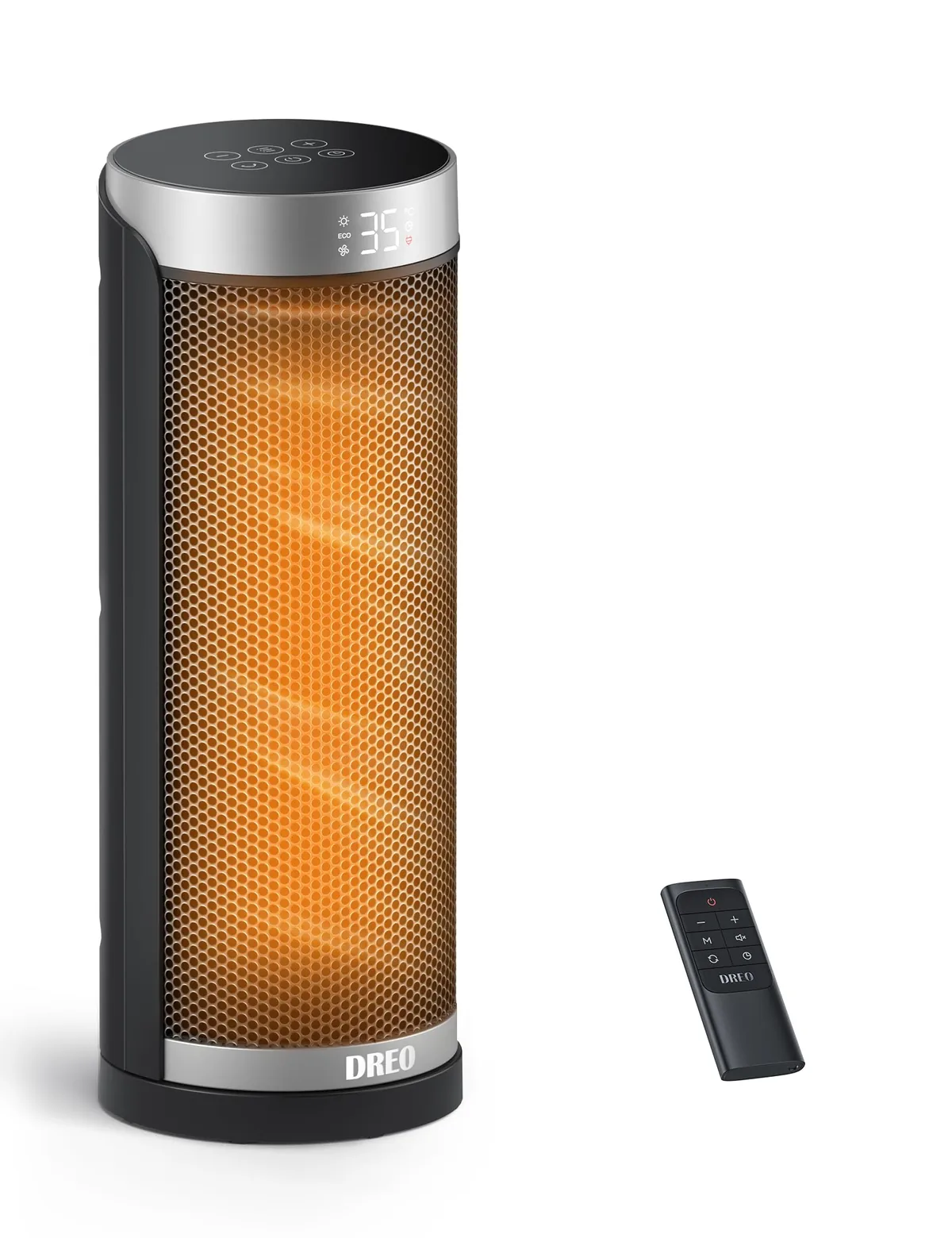
Dreo Tower Heater 2000W with 70-degree Oscillation and Remote
The most complete and best-rated Dreo in the comparison.
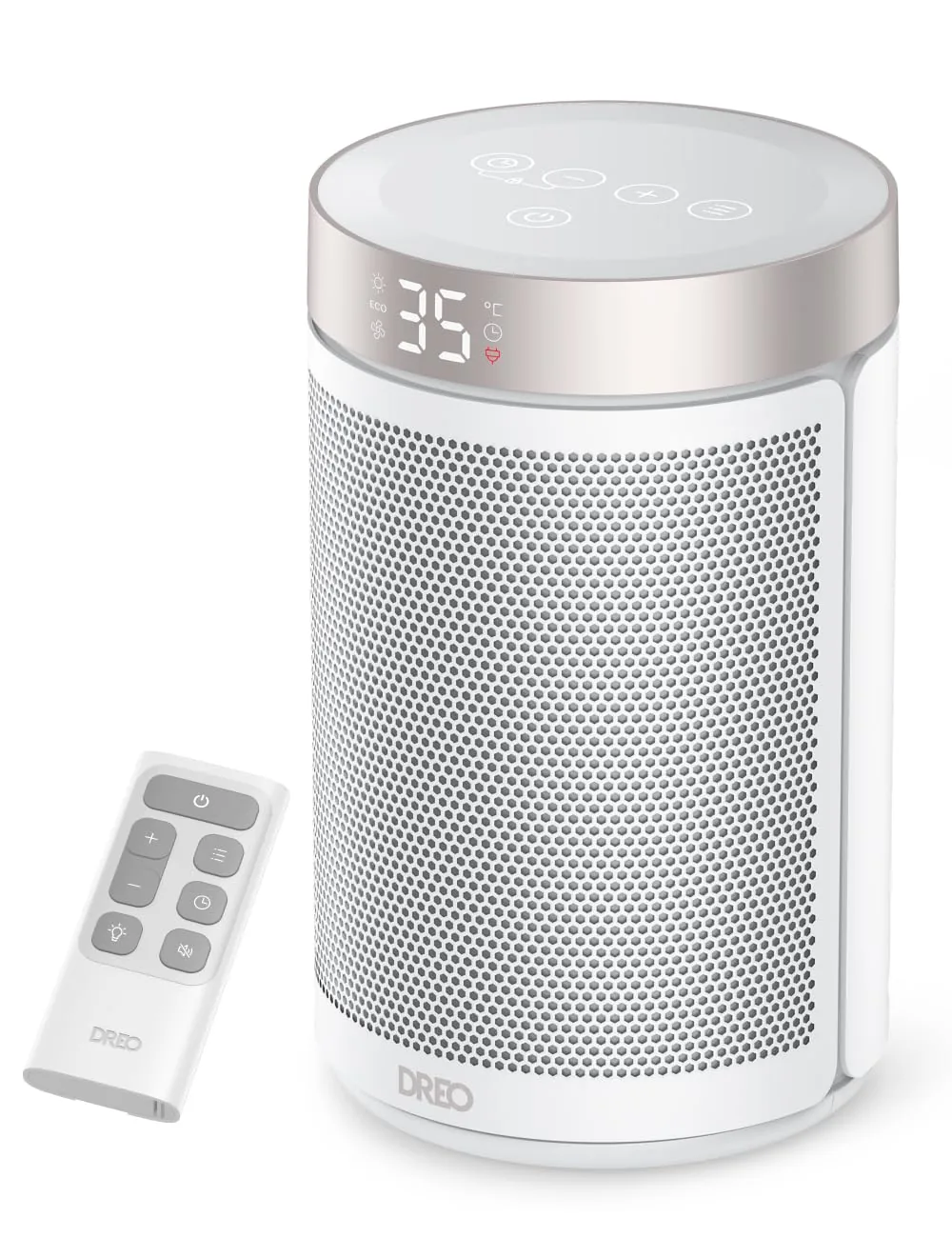
Dreo 1500W Quiet Ceramic Heater with Digital Thermostat
Outstanding features-per-euro for home use.
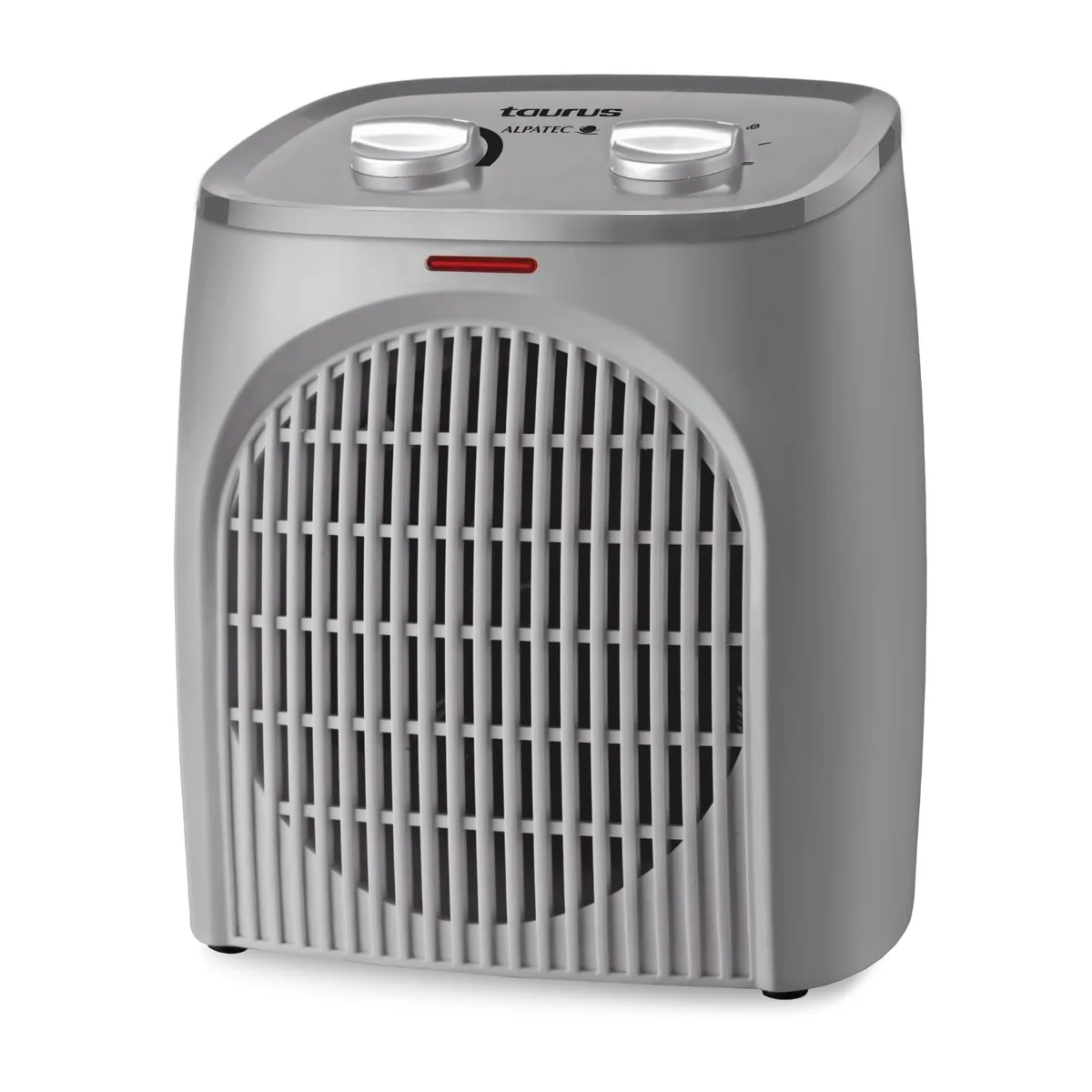
Taurus Tropicano Bagno Bathroom Heater 2000W IP21
The safe choice for the bathroom.
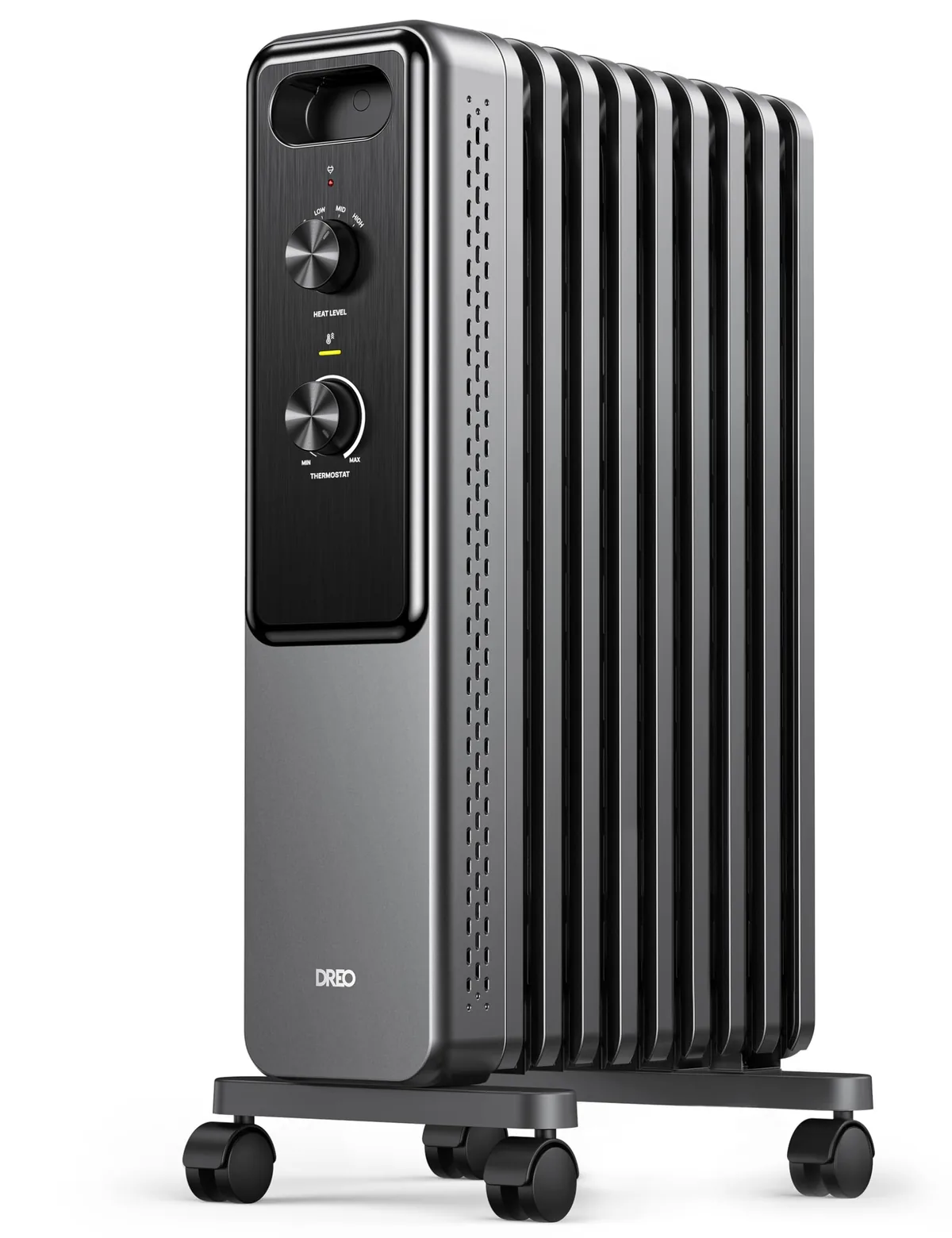
Dreo Oil-Filled Radiator 9 Fins 2000W Quiet
The quietest and the best for sleeping.
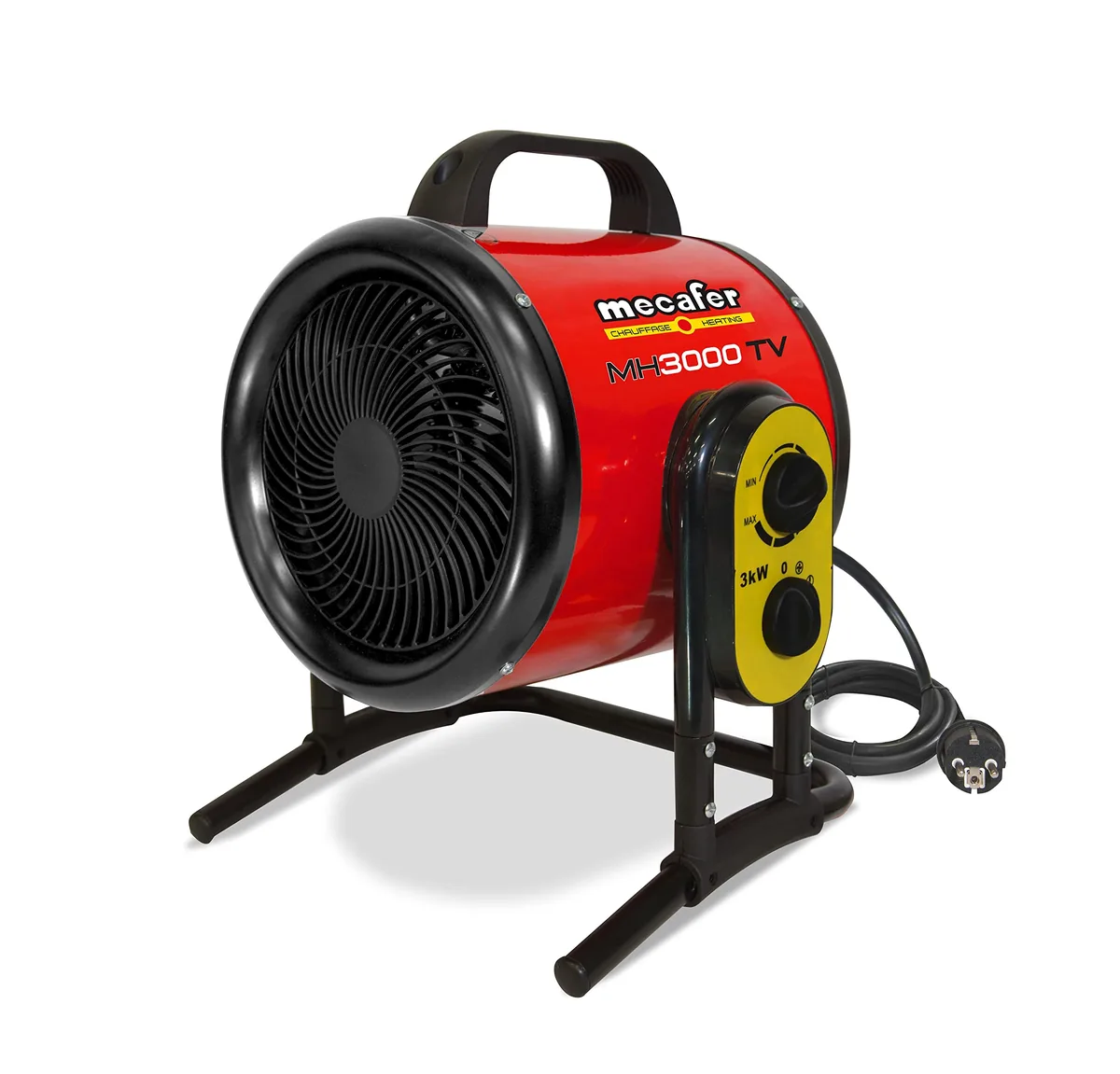
Mecafer Turbo mh3000vt 3000W Workshop Fan Heater
The most powerful in the comparison.
Frequently asked questions
How many watts do I need?
As a rough rule for a room with normal insulation, allow 60 to 100 watts per square metre. A 15 m² room is covered by 1000-1500 W; a 25 m² living room needs 2000 W or more. In an uninsulated workshop you have to raise the figure and think about an industrial model.
Which type of heater uses less energy?
Every electric heater turns nearly 100% of the electricity into heat, so at the same power they use the same while they're on. The real difference is the control: a precise thermostat and good power adjustment keep the device off full power more of the time. Oil-filled radiators and panels hold heat through inertia and tend to switch on and off less often.
Can I use an ordinary heater in the bathroom?
It's not advisable. The bathroom needs a device with moisture protection (IP21 rating or higher). Models made for the bathroom state this on their page.
Which one is quietest?
Oil-filled radiators and panels have no fan, so they are practically silent: the best option for a bedroom. Ceramic and forced-air heaters move air and are therefore audible, especially the industrial ones.
As an Amazon Associate, Kaikuse earns from qualifying purchases. Prices and availability shown are indicative, correspond to the capture date stated on each page and may change; the final price is the one displayed on Amazon at the time of purchase. “Amazon” and the Amazon logo are trademarks of Amazon.com, Inc. or its affiliates.